Home |
My honest opinion based on personal experience, hands-on use and long-term ownership.
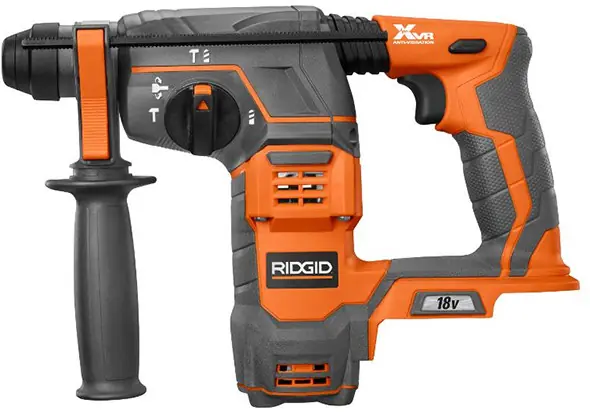
Brand: RIDGID
Model: R86711
Description: 18 Volt SDS-Plus Rotary Hammer
Disclosure: This review may contain affiliate links. If you make a purchase through one, I may earn a small commission at no additional cost to you.
Advertisement:

First Impressions at a Glance
Evaluation Area
My Initial Assessment
Packaging & Presentation
Accessories & Included Items
Build & Quality
Documentation & Instructions
Setup & Installation
Design & Function
Safety Considerations
Ease of Use
Features & Capabilities
Performance
Overall First Impression
*See How I Review Products for an explanation of my evaluation system.
When I first receive and begin using a product, I detail that initial experience through a First Impression at a Glance evaluation. This gives you a quick look at what I observed during the early stages of ownership, before I have had enough time to judge the product’s long-term performance, reliability, durability, or value.
Purchase Details
Source: Direct Tools Factory Outlet
Condition: New
Date: September 2021
Price: $125.
Warranty: Lifetime Service Agreement,
Always read and follow the manufacturer's operating instructions before using power tools. Wear appropriate personal protective equipment, including ANSI-rated eye protection, hearing protection when required, and any other safety equipment appropriate for the task.
This table gives you a quick snapshot of my initial experience with the product. If you're short on time, this will help you decide if the full review is worth reading.
The Specialized Tool I Didn't Think I Needed - Until I Used One
There are some tools that you buy knowing they’ll become a regular part of your workshop. Then there are the specialty tools that seem too expensive for something you’ll only use once or twice. The RIDGID R86711 SDS-Plus Rotary Hammer Drill fell squarely into that second category for me.
When I bought it, I wasn’t looking to expand my tool collection just for the sake of owning another cordless power tool. I had a specific problem to solve. I needed to drill numerous holes into my home’s poured concrete foundation and concrete block walls while working on my Adding a 4th Bedroom Project and Building a Dedicated Home Office. The walls I was framing needed to be anchored securely to the concrete slab using expansion anchors, and where new framing tied into existing masonry walls, local building codes required additional fastening to keep everything structurally compliant.
Like many DIY homeowners, I initially assumed the tools I already owned would be enough.
At the time, I reached for my RIDGID R8611503 18 Volt 2-Speed Hammer Drill. After all, it had a hammer mode and had served me well for plenty of projects. Unfortunately, it didn’t take long to realize I was asking that drill to do something it simply wasn’t designed to do.
It wasn’t broken. It wasn’t defective. It was simply the wrong tool for the job.
The holes were taking far longer than expected, the drill struggled to maintain progress, and it quickly became obvious that finishing the project this way would be an exercise in frustration. Rather than spending several days fighting the tool, I decided it was time to invest in equipment that was actually designed for drilling concrete.
That decision led me to the RIDGID R86711.
Why I Stayed with RIDGID
By the time this project came along, I had already built a fairly substantial collection of RIDGID cordless tools, batteries, and chargers. Switching to another cordless platform simply didn’t make financial sense. Unless another manufacturer offered something RIDGID couldn’t, I preferred keeping everything within the same battery ecosystem.
There have been exceptions over the years. During my Home Repipe Project, for example, I added the Milwaukee M12 FUEL™ ProPEX® Expander because RIDGID didn’t offer an equivalent solution for that application. But whenever possible, I try to avoid maintaining multiple battery platforms.
Fortunately, RIDGID already offered an SDS-Plus rotary hammer that fit my needs perfectly. Ironically, my biggest hesitation wasn’t the tool itself. It was whether I could justify spending money on what I believed would become a one-project tool. Looking back now, that’s probably the biggest misconception I had.
First Impressions
Like most RIDGID bare tools, there wasn’t much excitement surrounding the unboxing experience. The drill arrived in a sturdy cardboard box with the rotary hammer, depth stop, and owner’s manual. Since it was sold as a bare tool, batteries and chargers weren’t included, which wasn’t an issue because I already owned several.
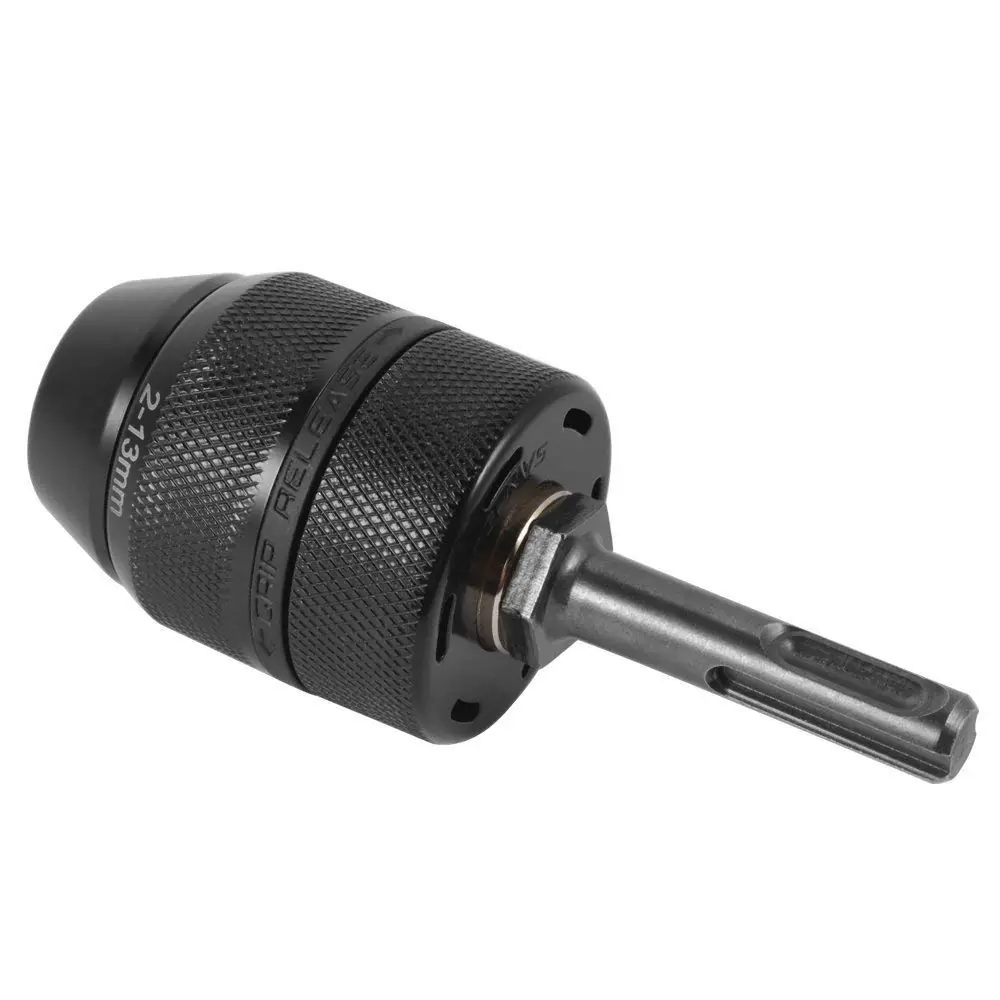
One thing that new buyers should understand is that this isn’t a conventional drill. An SDS rotary hammer uses SDS-style bits that lock directly into the chuck. Standard drill bits won’t fit without an adapter. I eventually purchased a [SDS/Chuck Adapter], which greatly expanded the tool’s usefulness by allowing me to use standard drill bits for lighter-duty work. Considering the relatively low cost of the adapter compared to the tool itself, I think it’s a worthwhile accessory that most owners should consider.
Setup couldn’t have been simpler.
Install a battery.
Insert the bit.
Go to work.
There wasn’t any learning curve just to start using it. The learning comes later, once you begin understanding how the tool behaves under load.
The First Hole Told Me Everything About the RIDGID R86711
Every once in a while you buy a tool that completely resets your expectations. This was one of those moments. The first time I drilled into concrete with the RIDGID SDS rotary hammer, I was genuinely amazed. I know that probably sounds a little dramatic for a drill, but if you’ve spent any time trying to drill concrete using a conventional hammer drill, the difference is almost shocking.
The best comparison I can make is that it felt like cutting cold butter with a hot knife. Instead of fighting the concrete, the drill simply went through it.
The holes were clean.
They were perfectly round.
The drill never felt like it was struggling.
It didn’t bog down or labor under the load.
It simply did exactly what it was designed to do, and it did it quickly.
The balance also impressed me. While drilling vertically into concrete foundations, the tool felt well-balanced and easy to control despite producing considerably more impact energy than a conventional hammer drill. That doesn’t mean it’s effortless. You still have to hold onto it. This is not a tool that rewards carelessness.
A Tool That Demands Respect
One characteristic became obvious almost immediately. This drill demands your attention. When using standard SDS masonry bits, maintaining a firm grip is important because the tool generates significant force. When stepping up to larger accessories like diamond core bits, that becomes even more critical.
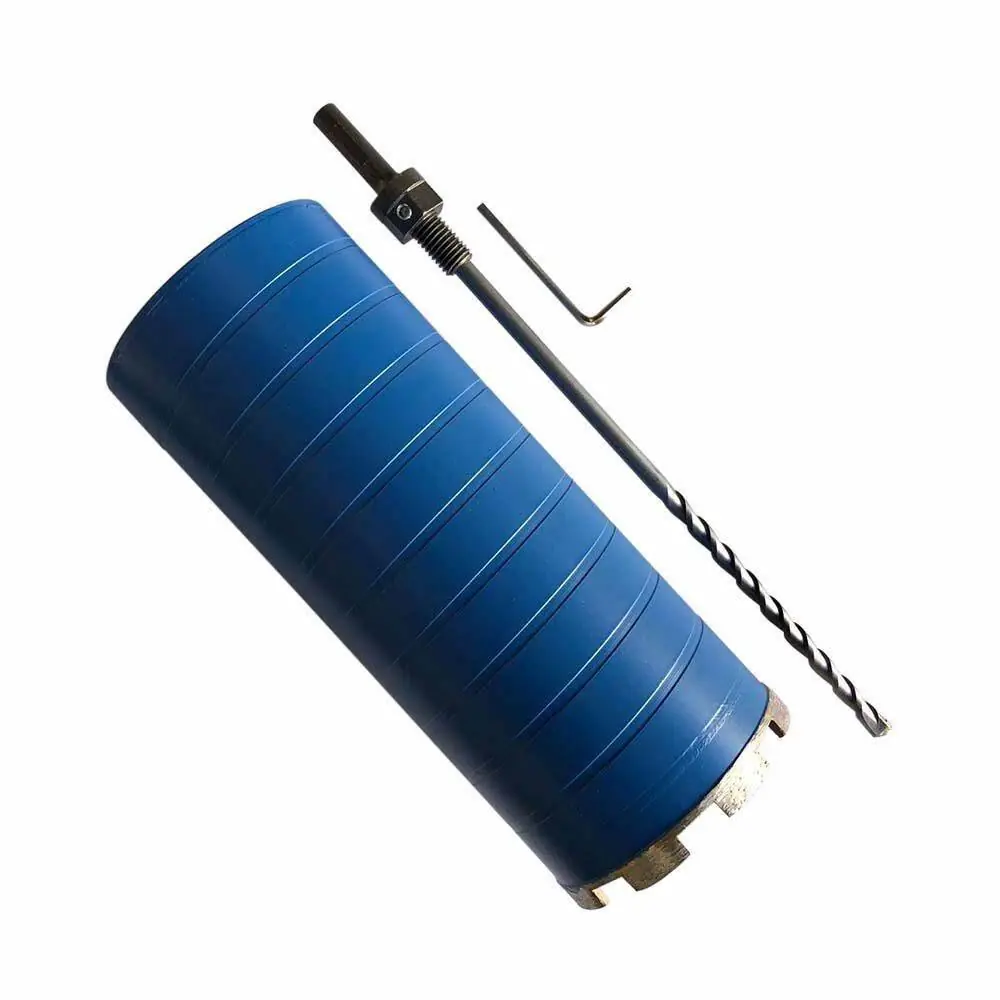
Core bits place tremendous torque on the drill. If you aren’t prepared, or if you’re holding the drill at an awkward angle, the tool can twist aggressively enough to surprise you. Learning how much pressure to apply, how to keep the drill aligned, and how to let the tool do the work is part of becoming comfortable with any SDS rotary hammer.
That’s why I wouldn’t describe this as a difficult tool to use. I’d describe it as a tool that rewards proper technique. Push too hard and you’ll fight it. Lean the drill sideways and it’ll let you know. Pay attention to the feedback through the handles, slow down with larger core bits, and the tool becomes remarkably predictable.
Like many specialized tools, experience matters. Fortunately, that experience comes fairly quickly.
There's One Thing Nobody Warned Me About
If there’s one downside that became immediately obvious, it wasn’t the drilling performance. It was the noise. When this rotary hammer is operating in hammer mode, it’s loud. Not just “wear hearing protection” loud. Extremely loud.
If someone is on the opposite side of the house, they’ll probably know exactly when you start drilling. My wife certainly did. The first time I used it indoors, she asked what I was demolishing because it sounded like the entire house was coming apart. If you’re planning an afternoon of drilling concrete inside your home, do yourself and your family a favor. Warn everyone beforehand. Better yet, encourage your spouse to spend the afternoon shopping or relaxing somewhere else because they’re going to hear every minute of it.
Hearing protection isn’t optional with this tool. Neither is eye protection. This is serious equipment designed to do serious work. Once you accept that, it’s difficult not to appreciate just how efficiently it accomplishes its job.
Real-World Projects Changed My Opinion
My original justification for buying this drill was fairly simple. I needed to finish one remodeling project, and I didn’t want to spend days fighting concrete with a tool that wasn’t designed for the job. What I didn’t expect was how often this rotary hammer would continue finding work long after that project was finished. That’s the funny thing about specialized tools. Before you own one, every project looks like something you can probably accomplish with the tools already sitting on your shelf. After you own one, you begin looking at projects differently because you know there’s a better way.
The RIDGID SDS rotary hammer has followed me through several remodeling projects over the years. During my [Home Repipe Project], I needed to bore a four-inch opening through an exterior concrete block wall to relocate the home’s main water service line. Later, during my [Laundry Room Makeover Project], it was called into service again to drill another four-inch opening for a new dryer vent.
Neither of those jobs would have been enjoyable using conventional tools. A quality diamond core bit mounted in an SDS rotary hammer simply transforms those jobs from an all-day struggle into something that can often be completed in minutes. The bits themselves certainly aren’t inexpensive. I spent nearly $100 on a single 4-inch by 10-inch diamond core bit, but considering the amount of labor it saved, I don’t regret that purchase for a second.
Even smaller jobs became easier. Mounting lumber storage racks in the workshop. Installing pool equipment hangers. Drilling anchor holes for wall-mounted storage. Whenever concrete or masonry entered the picture, this drill became the obvious choice.
Long-Term Product Evaluation at a Glance
Evaluation Area
Year 1
Year 2-3
Year 5
Overall Performance
Build Quality & Durability
Reliability
Ease of Use
Features & Functionality
Long-Term Experience
Value Over Time
*See How I Review Products for an explanation of my evaluation system.
These categories represent the key areas I focus on when evaluating product longevity. Each one plays a role in determining my overall long-term satisfaction.
The Right Tool Versus "Making Do"
One lesson this tool taught me is something I think many DIY homeowners overlook. Sometimes we spend too much time trying to avoid spending money. We convince ourselves that we can “make do” with something that’s close enough. Technically, that’s often true. A standard hammer drill will drill into concrete. A reciprocating saw can cut tree limbs. A circular saw can cut plywood. But there’s a tremendous difference between can and should.
I like comparing it to towing a heavy trailer through deep sand. Could you do it with a small four-cylinder car equipped with street tires? Maybe. Eventually. But why would you, when a four-wheel-drive pickup with a V8 is sitting in the driveway? That’s exactly how I now think about this SDS rotary hammer. Yes, I could probably drill a few small holes using my conventional hammer drill. But why? I already own the correct tool. The job will be cleaner. It will be faster. I’ll be less frustrated. And I’ll finish with more energy to keep working on the rest of the day. That’s something I never appreciated until I owned one.
Reliability I Never Had to Think About
One of the highest compliments I can give any power tool is that I stopped thinking about it. Not because it was boring. Because it simply worked. Over several years of ownership, this drill has never failed to start, never struggled with the work I asked it to perform, and never given me a reason to doubt whether it would complete the job.
That’s exactly what you want from a specialized tool. When you’re halfway through drilling anchor holes into a concrete foundation, the last thing you want is equipment that leaves you wondering whether it’s capable of finishing. This one never did.
It simply showed up, did the work, and went back on the shelf until I needed it again. There have been no unexpected repairs. No unusual maintenance. No noticeable decline in performance.
It performs today exactly as I remember it performing the first time I pulled the trigger. That’s impressive for a cordless power tool that’s frequently used under heavy loads.
Battery Performance Matters
One thing I have learned over the years is that this drill rewards using larger batteries. Mine was purchased as a bare tool, so I already had several RIDGID batteries available. After experimenting with different sizes, I eventually settled on using my 9Ah battery for nearly all heavy drilling applications.
An SDS rotary hammer demands a lot from a battery. Smaller battery packs like the 2Ah will certainly operate the tool, but under continuous heavy drilling they deplete very quickly. The larger 9Ah battery provides noticeably better endurance during longer projects, allowing me to stay focused on the work instead of swapping batteries every few minutes.
If you’re already invested in the RIDGID platform, I’d recommend pairing this drill with one of the larger-capacity batteries whenever possible.
My Opinion Today
When I bought this drill, I questioned whether I was wasting money on a tool I’d rarely use. Today, I wonder why I waited so long. That probably says more than any performance specification ever could.
This has become one of the most valuable specialty tools in my workshop, not because I use it every week, but because every time I need it, it saves me an incredible amount of time and effort.
I no longer dread projects that involve drilling into concrete. I don’t think about how difficult the job is going to be. I simply grab the SDS rotary hammer, install the correct bit, and get to work. That’s a level of confidence you only develop after years of dependable ownership.
Who Should Buy This?
I wouldn’t recommend this tool to everyone. If you’re an occasional homeowner who needs to install a single concrete anchor every few years, renting an SDS rotary hammer probably makes more financial sense.
On the other hand, if you’re remodeling a home, finishing a basement, building interior walls, installing concrete anchors on a regular basis, drilling larger penetrations through masonry, or simply expect to tackle projects over many years, I think owning one becomes much easier to justify.
The tool itself isn’t what changed my opinion. The capability did. Once you experience what an SDS rotary hammer can do compared to a conventional hammer drill, it’s difficult to go back.
Final Thoughts
The RIDGID R86711 taught me a lesson that extends well beyond this particular tool. Sometimes the most valuable purchase isn’t the tool you use every day. It’s the one that completely removes the frustration from the jobs you used to dread.
Before buying this rotary hammer, drilling concrete meant slow progress, extra effort, and a lot of patience. After buying it, masonry work became just another step in the project instead of an obstacle that I wanted to avoid. That’s why this drill has earned a permanent place in my workshop. Not because it’s used constantly. Not because it’s inexpensive. But because every single time I need it, it reminds me why buying the right tool is often cheaper than struggling with the wrong one.
If mine disappeared tomorrow, I wouldn’t spend time comparing brands or wondering whether I really needed another one. I’d buy another SDS rotary hammer without hesitation.
In my case, the RIDGID R86711 turned out to be one of those rare purchases that delivered far more value than I ever expected. I originally bought it to finish one project. Instead, it changed the way I approach every project involving concrete or masonry, and I honestly can’t imagine my workshop without it.
Without hesitation.
- Hard Core DIYer's
- Experienced User's
- Prosumers
- Budget Minded
- One time User