Home |
My honest opinion based on personal experience, hands-on use and long-term ownership.
Brand: RIDGID
Model: R86035
Description: 18 Volt Impact Drive
Disclosure: This review may contain affiliate links. If you make a purchase through one, I may earn a small commission at no additional cost to you.
Advertisement:


First Impressions at a Glance
Evaluation Area
My Initial Assessment
Packaging & Presentation
Accessories & Included Items
Build & Quality
Documentation & Instructions
Setup & Installation
Design & Function
Ease of Use
Features & Capabilities
Performance
Safety Considerations
Overall First Impression
*See How I Review Products for an explanation of my evaluation system.
When I first receive and begin using a product, I detail that initial experience through a First Impression at a Glance evaluation. This gives you a quick look at what I observed during the early stages of ownership, before I have had enough time to judge the product’s long-term performance, reliability, durability, or value.
Purchase Details
Source: Direct Tools Factory Outlet
Condition: New
Date: November 2017
Price: $135.
Warranty: Lifetime Service Agreement
*Price shown is for multi-tool kit.
Always read and follow the manufacturer's operating instructions before using power tools. Wear appropriate personal protective equipment, including ANSI-rated eye protection, hearing protection when required, and any other safety equipment appropriate for the task.
This table gives you a quick snapshot of my initial experience with the product. If you're shot on time, this will help you decide if the full review is worth reading.
RIDGID R86035 18V Impact Driver: Five Years of Real-World Use
It’s easy to recommend something when you aren’t the one paying for it. It’s easy to praise a product after using it for a few days and then moving on to the next thing. It’s harder to answer the same question after you’ve owned something for years, used it on real projects, pushed it harder than you probably intended to, dealt with its limitations, and watched how it holds up over time.
Would I make the same purchase again? In the case of the RIDGID R86035 18V Impact Driver, the answer is yes.
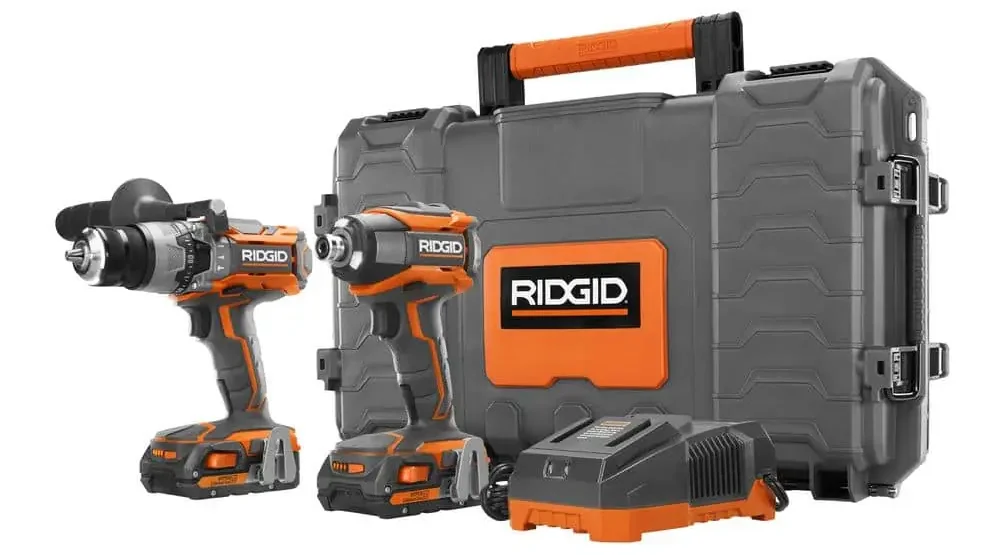
I purchased this impact driver in November 2017, it was included as part of the RIDGID R9624SB 2PC GGEN5X Kit With Hard Case. The other tool included the kit was a RIDGID R8611503 18V 2-Speed Hammer Drill/Driver. The kit came with both tools, two 2Ah batteries, a charger, and a hard carrying case. At the time, I was beginning to build a collection of cordless tools for the long term.
I wasn’t just buying a tool for one project. I was preparing for a future that included Woodworking, DIY Projects, and eventually purchasing a home that would need some work. I expected that home to be a lightweight fixer-upper, something I could improve over time with the tools I owned and the skills I developed.
Looking back, I didn’t really know what I didn’t know. I wasn’t an experienced woodworker or seasoned DIYer at the time. I knew there would be a learning curve, and I knew I wasn’t going to become Bob Vila or Norm Abram overnight. But I was determined to learn, and I wanted to invest in a tool platform that would serve me for years rather than buying inexpensive tools that I would quickly outgrow.
That is where RIDGID entered the picture.
Why I Chose RIDGID
I considered several established cordless tool platforms, including Ryobi, DeWalt, Milwaukee, and Makita. My decision ultimately came down to two major factors: RIDGID’s Lifetime Service Agreement and the cost of building into the battery platform.
At the time, I also discovered Direct Tools Factory Outlet, the manufacturer’s outlet for RIDGID and Ryobi tools. It offered blemished and factory-reconditioned tools at significant savings compared with traditional big-box-store pricing. That was important to me.
I was making a long-term investment in a cordless tool ecosystem, and the ability to purchase tools at a discount made that investment more attractive. There were also Direct Tools locations within reasonable driving distance, which made it easier to take advantage of those savings.
The impact driver itself was not necessarily the first tool I would have purchased if I were building a tool collection one piece at a time. A drill/driver can handle many of the same basic fastening jobs, and if your budget is tight, an impact driver can be added later. But when it was included in the combo kit at a significant cost savings, it made sense. Five years later, I am glad I bought it.
First Impressions
The impact driver arrived as part of a well-organized combo kit with a RIDGID 18V 2-Speed Hammer Drill, hard carrying case, two batteries, and a charger. The presentation felt more substantial than I expected from what I considered an entry-level investment at the time.
Getting started was simple. I put one of the included batteries on the single-port charger, and in just under an hour it was ready for its first assignment. There was no complicated setup process. After reviewing the multilingual user manual and safety documentation, the tool was ready to go.
My first meaningful use of the impact driver was likely assembling custom modular divider walls I had built for a rental home. The walls partitioned part of a two-car garage and were constructed from 2×4’s and ¾-inch plywood. Individual sections were screwed together and then bolted together to form the finished structure, including an L-shaped layout and a 36-inch access door.
I don’t remember the very first screw I drove with this tool, but I remember being confident in it very quickly. The tool felt solid and well built. It was simple, predictable, and straightforward to operate. I had no reservations about relying on it. That first impression has not changed in more than five years.
What I Like About an Impact Driver
Over time, I’ve come to consider an impact driver a foundational tool in a workshop. You don’t necessarily need one to complete every project. A good drill/driver can handle many fastening tasks. But once you have an impact driver available, you begin to appreciate how useful it is.
For woodworking and general DIY work, I frequently use an impact driver for driving screws and structural fasteners. It can handle standard Phillips and Torx fasteners as well as larger hex-head lag screws with the appropriate socket adapter.
It has also been useful across a range of materials and applications, including softwoods, hardwoods, masonry products, and concrete-related work where the appropriate fastener and technique are used.
The biggest benefit for me is not simply speed. It’s the reduction in physical effort. When you’re driving a large number of screws by hand or repeatedly using a drill/driver, the accumulated strain on your hands, wrists, and elbows can become noticeable. An impact driver does much of that work mechanically.
That doesn’t mean the tool is effortless. In fact, extended use can still become fatiguing, particularly when using larger, heavier batteries. But for repetitive fastening work, I would much rather have an impact driver doing the work than relying solely on manual effort.
When the Pavement Met the Road
The real test of any tool comes when you stop using it for small jobs and start asking it to do serious work. For me, that happened during the construction of my home office. I decided to build interior walls using 2×4 framing. Instead of using a framing nailer, I used this impact driver to drive hundreds of 3-inch #10 SPAX wafer-head screws.
Most people would probably reach for a framing nailer for that type of work. I didn’t own one at the time. I also tend to overbuild things. The impact driver handled the work.
There were times when the tool became hot after extended periods of heavy use. But I don’t consider that a failure or a meaningful weakness. I was pushing the tool hard, asking it to drive hundreds of fasteners over extended periods, and it continued doing the job.
A couple of years later, I put it through another demanding test. During a 10-by-25-foot patio restructuring project, I used the impact driver while building 2×8 roof trusses. This time, I asked it to drive 10-inch structural lag screws. Again, it did the job.
These are the experiences that changed my opinion of this tool from “good enough” to “reliable workhorse.” The R86035 wasn’t sitting on a shelf waiting for an occasional household screw. It was being used on real construction projects, including tasks that placed significant demands on the tool, but it kept working.
Power That Requires Respect
There is a learning curve to using an impact driver, particularly if you’ve never used one before.
This tool is powerful. With larger-capacity batteries, it has enough torque to potentially twist the tool in your hand or even break bits if you’re not paying attention. That power is useful, but it also means you need to learn how to control it.
The R86035 has three torque settings, and I strongly recommend that anyone new to impact drivers spend some time practicing before using one on an important project. Try the different settings. Drive fasteners into different materials. Learn how quickly the tool drives a screw and how much torque it applies. That practice is worthwhile because an impact driver can easily overdrive a fastener or strip a hole if you aren’t careful.
Masonry requires particular caution.
Depending on the fastener, material, and application, an impact driver can continue spinning a screw after the threads have stopped doing what you intended them to do. The screw can effectively begin acting like a drill bit, enlarging the hole and compromising the fastener’s ability to hold.
My approach is to drive screws almost completely with the impact driver and then finish them by hand when I need more control over the final depth. That small technique has helped me avoid stripping holes and over driving fasteners.
The lesson here isn’t specific to the RIDGID R86035. It applies to impact drivers in general. Power is useful, but you have to learn how to use it.
Long-Term Product Evaluation at a Glance
Evaluation Area
Year 1
Year 2-3
Year 5
Overall Performance
Build Quality & Durability
Reliability
Ease of Use
Features & Functionality
Long-Term Experience
Value Over Time
*See How I Review Products for an explanation of my evaluation system.
These categories represent the key areas I focus on when evaluating product longevity. Each one plays a role in determining my overall long-term satisfaction.
Where It Fits and Where It Doesn't
After five years of ownership, I consider an impact driver a foundational tool that belongs in most DIY and woodworking tool collections. The R86035 has proven capable of handling a wide range of fastening tasks, from ordinary screws to substantial structural fasteners.
But I wouldn’t consider it the right tool for every job. For example, I don’t see this as an automotive repair tool. While it has plenty of power for many fastening applications, automotive work has different requirements. Battery-powered or pneumatic ratchets and other purpose-built automotive tools are generally better suited to that environment.
For woodworking, construction, and general DIY fastening, however, I have found this impact driver to be extremely useful. If you’re buying your first cordless tool collection and have a limited budget, you may be able to get by with a drill/driver initially. But if you have the opportunity to purchase a combo kit that includes an impact driver at a reasonable price, I consider it a very worthwhile addition.
Ergonomics and Long-Term Use
The R86035 is not a lightweight tool in every configuration, and extended use can become fatiguing. I noticed this most when I spent much of a day driving hundreds of screws while framing walls. Now that I’m in my fifties, the thumb, wrist, and elbows eventually knew they had been working. However, I don’t put all of that fatigue on the tool itself. Driving hundreds of screws in a single work session is physically demanding regardless of which cordless tool you’re holding.
The larger 9Ah batteries can also increase fatigue because of the additional weight. While the extra battery capacity is useful for demanding work, the combination of the tool and a large battery becomes something you notice after several hours. For occasional fastening, I don’t consider this a significant issue. For all-day repetitive work, it’s something to keep in mind.
Five Years Later
This is where the R86035 has really earned my respect. I have owned this impact driver for more than five years. I only use it occasionally now, depending on the project, but it remains a tool I trust when I need it. My opinion hasn’t changed since those first few months of ownership.
The tool has remained consistent in its performance, and I have noticed:
- No meaningful decrease in power or capability.
It has required no unusual maintenance.
It has never required a repair.
It has never left me needing a backup because it failed at a critical moment.
There is one minor cosmetic issue worth mentioning. A small corner of the rubber grip has loosened over time and eventually tore away. I suspect this was caused by repeated exposure to moisture from perspiration during extended use. It doesn’t affect the tool’s performance. It’s primarily a comfort and cosmetic issue, and after more than five years of ownership, I consider it a minor wear item rather than a serious durability concern.
The important part is what hasn’t changed.
The motor still performs.
The controls still work.
The tool still delivers the performance I expect.
The reliability I experienced when the tool was new is the same reliability I experience today.
What I've Learned After Five Years
The biggest lesson this impact driver has taught me is that you need to learn how to use the power available to you. An impact driver isn’t simply a stronger, faster drill. It behaves differently.
The combination of speed and impact torque means that the person operating the tool has a significant influence on the result. Understanding the torque settings, choosing the right bit, knowing the material you’re working with, and recognizing when to stop using the impact driver and finish a fastener by hand are all part of getting good results.
Once you learn those things, the tool becomes much more predictable. And that’s exactly how I would describe the R86035 after five years: predictable.
I know what to expect from it.
I know when it is the right tool for the job.
I know when I should use a different tool.
That familiarity is one of the benefits of long-term ownership that you simply can’t get from a short-term product test.
Who Is This Impact Driver For?
Based on my experience, I think the R86035 is suitable for a broad range of users.
A beginner can use it successfully, provided they take the time to learn how an impact driver works and practice before tackling an important project.
Intermediate and advanced users will appreciate the power and versatility when working on more demanding projects.
For general DIY and woodworking applications, it has proven itself to be a capable tool that can handle much more than basic household fastening.
I would particularly consider it a good choice for someone already invested in the RIDGID cordless tool ecosystem or someone who can purchase it as part of a combo kit at a good price. If you’re primarily looking for a tool for automotive repair, however, I would look elsewhere and choose a tool designed specifically for that type of work.
Final Thoughts
The RIDGID R86035 18V Impact Driver has been a good investment for me. I purchased it alone with the RIDGID R8611503 18V 2-Speed Hammer Drill/Driver in a combo kit at a significant discount through Direct Tools Factory Outlet, but even if I had been required to pay full big-box-store pricing, I believe it would still have been worth the money.
This is a well-priced, quality tool that has proven capable of serving a wide variety of users and applications. It has been used for everything from assembling basic structures to driving hundreds of screws during wall framing and installing 10-inch structural lag screws during a patio reconstruction project.
It has taken everything I’ve asked of it. It has gotten hot under heavy use, but it kept working. It has developed a small cosmetic issue with the rubber grip, but the tool itself continues to perform.
After more than five years, I have no reason to believe it won’t continue working for years to come. More importantly, this tool has become part of my normal workflow. I don’t think about whether I can trust it anymore. I simply pick it up when the job calls for an impact driver and get to work.
That is what I want from a power tool. Not hype. Not a long list of impressive specifications. Just reliability.
After more than five years, the R86035 has proven itself to be a reliable workhorse in my workshop. I bought it with my own money. I’ve used it on real projects. I’ve pushed it hard. I’ve lived with it long enough to see its strengths and its minor shortcomings. And after all of that, I would still spend my own money on it again. That’s about as strong an endorsement as I can give a power tool.
Without hesitation.
- Demography Group 1
- Demography Group 2
- Demography Group 3
- Demography Group 4
- Demography Group 1
- Demography Group 2
- Demography Group 3